

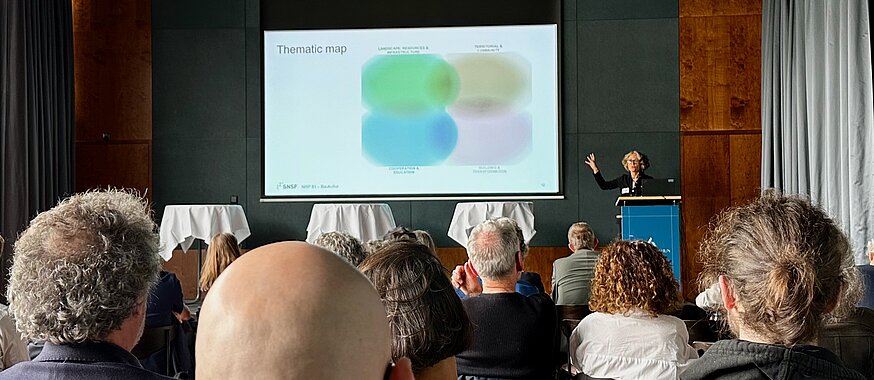
How COBASI contributes to and benefits from the National Research Programme NRP 81
COBASI is funded by Swiss National Fund SNF, by the National Research Programme NRP 81 on Baukultur. More important, there are several aspects how COBASI contributes to and benefits from the NRP 81.
Transforming our Environment
The NRP 81, “Baukultur – for an ecological and social transition of the built environment”, provides a national framework for rethinking how we plan, build and transform our living environments. NRP 81 places Baukultur at the centre of societal, ecological and economic change and explicitly calls for research that connects analysis with implementation.
COBASI is closely aligned with this ambition. By focusing on rural municipalities, the project addresses a context that has so far received less attention in the Baukultur debate. COBASI contributes to NRP 81 by expanding the understanding of Baukultur through the lens of basic services. It shows how buildings, public spaces and services of general interest are interdependent and how this relationship shapes everyday life, social cohesion and local identity. Through its systematic analysis of good practices, typology development and co-creation processes, COBASI generates concrete knowledge on how Baukultur can become a driver of rural transformation.
Intellectual and Institutional framework
At the same time, NRP 81 provides COBASI with an important intellectual and institutional framework. The programme situates the project within a broader national discourse, connects it to parallel research efforts and links it to key policy debates at federal level. Instruments such as accompanying events, knowledge exchange formats and the visibility of the programme help ensure that COBASI’s findings resonate beyond individual case studies. NRP 81 also reinforces the project’s implementation focus by emphasising transfer, impact and long-term relevance.
In this reciprocal relationship, COBASI acts as a testing ground for NRP 81’s objectives in rural contexts, while NRP 81 amplifies COBASI’s insights, embeds them in a national narrative and supports their translation into practice. Together, they demonstrate how Baukultur can be both a research topic and a practical tool for shaping resilient, liveable and inclusive places.